


Moving Your Accounts: Rollovers and Transfers Explained
How old 401(k)s, IRAs and brokerage accounts move to LPL Financial, and what to avoid along the way.
Read the Article →You don’t need everything for the first meeting. The more we can see, the more useful your plan will be.
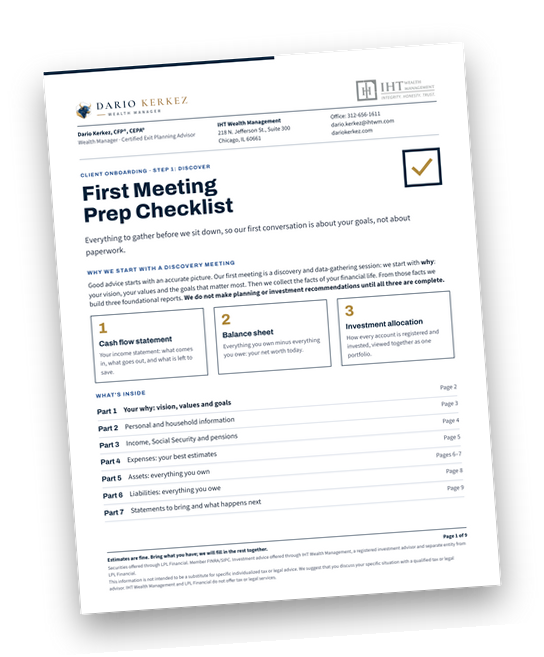
Please don’t email account numbers or statements. We’ll give you a secure way to share documents.
See your whole financial picture, test decisions before you make them, and keep every report in one secure place, between meetings and during them.
Your investment accounts are held in custody at LPL Financial, not by me personally. You receive statements and confirmations directly from LPL, and you can see your accounts any time through LPL AccountView.
Most clients go from the first call to a working plan within a few weeks, depending on how quickly documents come together.
Your accounts are held at LPL Financial, an independent custodian. You receive statements directly from LPL and can view your accounts anytime in AccountView.
Yes. I work alongside the professionals you already trust and coordinate with them.
Fees are explained up front, before you decide to work together, and are described in our Form CRS and Form ADV Part 2A.
We’ll review your options together, including leaving it, rolling it over or consolidating, before any money moves.

